Thursday, November 18, 2010

Week 7 Module

1. Explain: What new learning have you taken from this module?

Image taken from "Inuit Observations
of Climate Change"
I really enjoyed watching the video “Inuit Observations of Climate Change”. In part of the video they were talking about how researches talk to the women about the fat content of animals. I had never thought about that relationship before. The women have hands on experiences with how the animals have changes over the years. What a wealth of information, I am happy to hear that researches are writing the information down!

The video “Seeing Stars” was very educational for me. I had no idea astronomers where measuring the wobble of stars. It really is amazing what science can do these days. Many times when I watch videos like this I am reminded of science fiction from when I was a child, scientists were looking for other planets to colonize.


2. Extend: How can/will you use this week’s resources and/or others in your community in your lessons?

The video clip “Life Before Oxygen” will work great in my life science class in a few weeks. We will be talking about photosynthesis and how important it is to have plants to balance out the animals on the planet. This video really shows how different our atmosphere would be if we didn’t have plants. It is also a great reminder to us about how important it is that we keep a health plant population on the planet.

I am currently teaching astronomy in one of my Earth science classes. I will be showing my students the video “The Elements: Forded in Stars”. I really like how the explanations in the video and brought down to a level my students can understand. The graphics and simple, but really do a good job at giving students visuals. I personally enjoyed how they went between the two scientists telling the story. It made it more enjoyable to watch.


3. Evaluate: How useful, insightful or relevant are this module’s information and resources for you?

I will be showing the video “La’ona DeWilde: Environmental Biologist” in my classes. I really like this video for many reasons. It is really nice to show my students what kind of job you can have with a science degree, and the fact that it is a native woman who has the degree and job is wonderful. It is always great to show my students role models. Many of them don’t think it is possible for them to leave the village and go off to college. Here is a great example of a woman who did that.
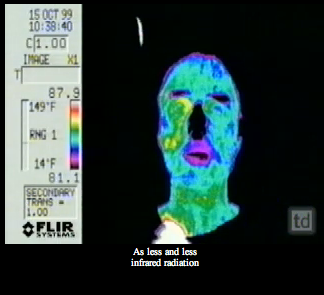
Image taken from "Global Warming:
Carbon Dioxide and the Greenhouse Effect"
I used the video “Global Warming: Carbon Dioxide and the Greenhouse Effect” in my Earth science class about three weeks ago. The students really enjoyed watching it. What an amazing visual. Even I was surprised the first time I saw the video. I did not know that carbon dioxide would have that dramatic of an effect on infrared radiation. This demonstration really puts greenhouse gasses in perspective. 


3 Colleagues

On “Esther Gust’ Explore Alaska” page she talks about how easy it is to make the cultural connection when you live in a village on the ocean. I totally agree with this. It is very easy to understand how important the ocean is when your students rely on it for food.

On the “Science Explorations” page Alicia mentioned how she finds it interesting that the pollution from other places comes to Alaska. I also found that interesting, and very sad. When I was younger I thought of Alaska as a pristine place that was untouched by pollution.

On his site “Doug’s Explore Alaska Blog” he mentioned how useful Google Earth weather layer will be in his earth science class. I also have been using Google Earth in my classes. It is such a great toool, and I love the layers you can get.

Sunday, November 14, 2010

week 6 Module

1. Explain: What new learning have you taken from this module?

Image from Contaminants in the Arctic Food Chain
I found the video clip “Contaminants in the Arctic Food Chain” very fascinating. I had no idea that the arctic was more affected by mercury and PCBs than other parts of the world. From everything you hear about preservatives, and other chemicals that are added to store bought meat you would think that eating from the ocean would be the best way to go. How unfortunate it is that people who are living off the land have their food contaminated through no fault of their own. 

The video clip “Arctic Haze” was very interesting to watch.  One key thing I really noticed about the clip was when the bush pilot Dennis Miller was talking about what he saw. He had been flying in the area for 15 years and he noted how it has become more dense and frequent. In just 15 years he was able to notice the difference with the naked eye. That is a scary thought. What will it be like in another 15 years?


2. Extend: How can/will you use this week’s resources and/or others in your community in your lessons?

The YouTube clip “Reveal Earth’s Atmosphere” will make a great anticipatory set when we do the atmosphere in Earth science. I love showing my students clips like this because it gets them excited for what we are about to learn. I thought surfing on the air was a great way of showing a real life example of science. It was also something my students will want to do, and hopefully, that will spark their curiosity about the atmosphere.

I will show the video clip “Ocean Temperatures and Climate Patters” in my Earth Science class when we study climate patterns. It is so important for students to understand that climate is not self-contained. This video clip shows how the Earth works together as a systems, not many independent systems.

“Giving Rise to the Jet Stream” will be a great interactive activity for my students. It is nice to have something for them to do on the computers. I will use this with them when we have the computers out for a project or writing assignment. Unfortunately, the high school only has one set of computers. So when I check them out I want to use the computers for a whole class period.


3. Evaluate: How useful, insightful or relevant are this module’s information and resources for you?

Image from Google Earth
I really enjoyed using the “Weather Layer” in Google Earth. I think this layer helps give a more accurate image of the Earth. When we use Google Earth we see the Earth without any clouds. This is not what Earth really looks like from space. I think it is very valuable for students to see this layer, and explore what the clouds look like from space and see how they change. It would be a fun and interactive activity for my students to look at this layer for a few minutes each day and see how it changes. They could even put together screen shots to compare each day. 


3 Colleagues

On her page “Cultural Connections in Earth Science” Janet mentioned a layer on Google Earth that shows shots from webcams. I had not notice this layer. I am sure I will be able to use it when we study weather in my Earth science class.

I really enjoyed reading Alison’s blog “Explore Alaska with Alison”. She makes some great points about how it bothers her that there is so much pollution, but that doesn’t stop her from making it. I completely agree with this. I live on an island and I have to fly very often. Flying is not the most environmentally friendly thing, but I still do it. Unfortunately, that is only one of many examples.

On his blog “Let’s Explore Alaska and get Connected!” Kevin mentioned a study that looked at ice cores to study metal deposits. I find it so fascinating how you can associate events in history with the amount of pollution that humans are releasing. It only makes sense that during the depression there was less pollution. 

Saturday, November 6, 2010

Week 5 Module

1. Explain: What new learning have you taken from this module?

I found the YouTube clip “Ben Franklin and The Gulf Stream” very fascinating. I had no idea Franklin mapped out the Gulf Stream. It is amazing how he was able to create such an accurate map with the technology of the time. This is really a great example of how accurate measurements can be done without the aid of computers and GPS.

I really enjoyed looking at the climate differences between Washington, DC and San Francisco. It is nice to have an interactive lesson where I looked at the two locations, compared their latitude, compared their climates and then looked at how ocean patterns could be affecting their climates. I would like to do an activity like this with my students. It is a lot more fun making the connections on your own instead of just reading the answers.
Image taken from Google Earth


2. Extend: How can/will you use this week’s resources and/or others in your community in your lessons?

The video clip “Living from the Land and Sea” I can use for a cultural and ecological connection. An example of this is how an elder talked about putting the leftovers from cleaning fish into the garden. When my students studied the nitrogen cycle we talked about how important it is to put nitrogen back into the soil. This video clip shows that this knowledge has been passed down for generations, they understand how to take care of the land!

Image taken from "Warmer Oceans Affect Food Web"
My students will really enjoy seeing the video clip “Warmer Oceans Affect Food Web”. They love learning about global warming because it affects their way of life. In one of my classes global warming was mentioned and the students wanted to talk about it for the rest of the period. They told me about how in their lifetime they have seen the changing patterns of where they go to hunt polar bear. I love teaching things that the students love learning about.

“Warmer Oceans Affect Food Web” is also a great video for my students because it talks about bird populations. Many of my students hunt the birds on the island for food. They need a healthy bird population to provided food for their families throughout the winter.  Also, the economy of the island would be greatly hurt if the bird populations went down. Gambell is a very popular spot for birders in the summer and early fall. There are a very limited amount of job on the island, and many of them revolve around the birders. 

The video clip “What caused Earth’s Seasons” will be a great reinforcement video for me to show my earth science class next week. We just did an activity where we created a model of the solar system.  One of the points of the model was to demonstrate why we have seasons. It is always nice to have a short video to remind the students what we talked about the previous week.


3. Evaluate: How useful, insightful or relevant are this module’s information and resources for you?

The YouTube clip “Oceans of Climate Change” could have not come at a better time for me. One of the questions on our district assessment is: “During the winter months in Nome, it is often 10 or more degrees warmer than in Fairbanks. Explain what causes this.” I was looking for a lab or other resources to help show the concept of heat capacity to my students. The YouTube clip will be perfect. We can also do the balloon demo in class. 


3 Colleagues

Alicia also lives next to the Bering Sea. Geography isn't my strong subject, so I don't where many villages are located. On her site, “Science Explorations”, she commented about how much they rely on the ocean for food. It would be interesting to live in a village that is away from the ocean and see the differences in lifestyles.

Dan, on his site "Dan Adair Blog Site",  writes about using visual aids in class more often. I completely agree with this. It always amazes me how much the students can get out of a 2-3 minute clip. Sometimes they take away more from that then when I lecture for a whole class.

Tommy made a comment, on his site "Explore Alaska", about how slow internet can make Google Earth hard to do in the classroom. I understand what he is saying about the slow internet connection. When I tried Google Earth with one of my classes it took a long time for their pictures to come it. My students were really excited about learning Google Earth, but were not happy with the wait time.

Sunday, October 31, 2010

Week 4 Module

1. Explain: What new learning have you taken from this module?

I found the video clip “Contemporary Land Issues Regarding Mauna Kea” very educational. I never take the time to stop and think about the cultural impact that science has on locations around the world. It is easy to overlook the cultural value of land when you want to use it for another purpose. I am very glad to hear that the university decided to set aside land that would not be disturbed.


The video clip “Volcanoes in the Infrared” was very fascinating for me to watch. I had no idea scientists were currently using this technology on volcanoes. I am often so busy I do not read up on how scientists are using technology today. I think showing students technology helps spark their interest in class. 


2. Extend: How can/will you use this week’s resources and/or others in your community in your lessons?

The video clip “Living on the Coast” is amazing! This video will be perfect for cultural awareness standards. My students can relate to the three cultures shown because they also live on the water, and depend on it for food. I love anything that students can relate to, and they take away so much from it. Another great connection with their video is the fact that I grew up in Massachusetts. I will be able to talk about my own experience, and what I saw when I visited New Bedford.

The video clip “1964 Alaska Earthquake” is great for my students because they can relate to it. They really enjoy watching and reading about anything that happens here in Alaska. My students can also relate well to the portion of the video that shows the tsunami. Living on the water it is so important for them to be aware of the danger of a tsunami. 


3. Evaluate: How useful, insightful or relevant are this module’s information and resources for you?

The resources on tsunamis are very useful to me because I teach about them in two different levels of science. In one on my classes I taught about tsunamis about a month ago. I wish I had these video clips then. Three of my students where having a very hard time understanding the concept of a tsunami. I love having any resource that can show concepts visually. I have found that a picture, or video clip, is worth a thousand words.

The measuring tool on Google Earth is very useful to me. From the standpoint of teaching, but also in my own life. I have often wondered how far teacher housing is from the school. I have heard some estimates, but never knew an accurate measurement. Sometimes I am taken back by how easy things are with modern technology. With two clicks of a mouse I can measure distance anywhere around the world. That is just crazy. 
Image taken from Google Earth


3 Colleagues

The first site I went to was “Dan Adair Blog Site”. I thought it was wonderful that he posted “The Electromagnetic Spectrum Song”. I used this song with my students last year and would have never guessed other teachers used it.

The second site I went to was “Doug’s Explore Alaska Blog”. I really like how he talked about this lesson being a reminder of the power of the tectonic plates. So many things are changed, created and destroyed by their movement. It is easy for me to forget how much energy they have because I don’t see their effect first hand very often.

I agree with Tracy about how important it is to teach our students about what to do in an emergency. On her blog “Explore Alaska” she gives some examples of different lessons that would help students if they were in an emergency situation. 

Saturday, October 23, 2010

Week 3 Module

1. Explain: What new learning have you taken from this module?

Image taken from "On the Yukon River"
The most fascinating thing I learned from this module was from the video “On the Yukon River”. I had no that in central Yup’ik the word for fish is the same as food. I have not had much exposure to central Yup’ik so I unaware of how important fish are to them. This really shows how important it is that the fish population is kept healthy and safe.


2. Extend: How can/will you use this week’s resources and/or others in your community in your lessons?

The “Richard Glenn: Inupiaq Geologist” clip is amazing for many reasons.  First, it is a wonderful example to share with my students. Many of them want to leave the island for college, however, the want to return when they are done. I see the conflict in them whenever we talk about what they will do after high school. Should I go away to college, or should I keep my traditional ways? Richard Glenn does both of these things. He earned a college degree and is still able to take part in his culture. This will show my students a real person who did both.

Second, this clip also covers ‘career skills’ standards for my students. Here is a scientist who is making money, making a difference for his people, and enjoying his job. This career choice is realistic for my students.

Third, I love the quote he ends with when discussing western and Inupiaq approaches: “Is there a conflict there? I don't think so. I think they are just two flashlights shining down the same path.” Another wonderful example of how western science and traditional knowledge can work together, and are both valued. The more my students hear this, the better!


3. Evaluate: How useful, insightful or relevant are this module’s information and resources for you?

I think the “Teachers’ Domain” video clips are wonderful for my students. My earth science class started plate tectonics last week. I showed them “Plate Tectonics: An Introduction” and “Tectonic Plate Movement in Alaska”. Both videos gave wonderful visuals for my students and I believe seeing the clips helped them understand the concepts. One of my students asked me to see “Tectonic Plate Movement in Alaska” for a second time.  


3 Colleagues

The pictures on the site “Cultural Connections in Earth Science” are beautiful. I really enjoyed seeing them. It is always nice to be reminded of the amazing colors and landscapes that are out there. Janet also commented on the fact that the central Yup’ik work for food and fish are the same. She stated she likes Teachers’ Domain and wishes she had know about it before. I completely agree with this and I have shared the site with staff at my school. It is a wealth of resources!

On the “chenalakesfarm” site Tracy mentions an idea for a project where the students create a circular sequence map. I think this is an amazing idea and I will use it in my life science class. I am always looking for ideas to connect my student’s lives and science. This could be a great poster project to create and hang up in the class. 

The third site I choose to visit this week was “Explore Alaska!: Alaska Native & Western Perspective”.  In his entry Dave writes about taking his class out to explore the landscape and different types of rocks. I also really enjoy taking the students out and see the natural examples all around us. 

Saturday, October 16, 2010

Week 2 Module

1. Explain: What new learning have you taken from this module?  

Before I read “Traditional Knowledge Systems in the Arctic” I had no idea there was a definition for “traditional knowledge”. I have heard and used the phrase very frequently without ever stopping and thinking about it.  Was my understanding of traditional knowledge accurate? Is it a term I used the wrong way?  I am very relieved to find out the definitions matched what I believed tradition knowledge to be.


2. Extend: How can/will you use this week’s resources and/or others in your community in your lessons?  

I love the Traditional Native Knowledge and Western Science Venn diagram and have posted it in my classroom. I feel it is very important to let students know that their traditional ways are just as important and valued as western science. The Bering Strait District gives common exams to all of the sites. One exam question is how do native ways of knowing compare to western science. This diagram is a wonderful visual for my students.

In two of my classes we are starting astronomy in about three weeks. The Nova clip "Galileo: Sun-Centered System" is a perfect anticipatory set for starting an astronomy unit. I think it is very important for students to know ideas about the universe change, and much of what we are talking about is theory. It was not long ago people believed Earth was the center of the universe.


3. Evaluate: How useful, insightful or relevant are this module’s information and resources for you?

When I was doing my student teaching I had a small introduction to Google Earth in one of my classes. It has always been in the back of my mind, but I never really paid much attention to it. After reacquainting myself to Google Earth I remembered how wonderful it is. One of my goals for this weekend is to install the program on the high school laptops so I can use it with my students. It was so much fun exploring, and I am sure my students can have fun while learning. On a side note the images of my parent’s farm house were taken on the day of my wedding. If you look closely you can see the arch laying down in the grass. 
Image taken from Google Earth


3 Colleagues

The first blog I went to was Science Explorations. I really enjoyed reading this blog because she talked about what the word holistic means. Holistic is another word that I have often heard, but never took the time to figure out exactly what it means.


The second blog I read was Explore Alaska with Alison.  She also takes her students outside to use nature to teach science. However, it must be very hard not to have a lab to fall back on. I admire that she is still able to teaching engaging lessons. I am sure her students appreciate it. 


The third blog I read was Explore Alaska. I really liked how she talked about cycles as common ground between native and western ways of thinking. I had never made this connection before and I believe it is a good way to introduce different types of cycles to my students in the future. 

Monday, October 4, 2010

Week 1 Module

1. Explain: What new learning have you taken from this module?  
The Teacher Domain site is a new tool that was introduced to me this week. So far it looks like a great too. I also learned some new things about blogging. I am sure they will help me start my new blog off right.


2. Extend: How can/will you use this week’s resources and/or others in your community in your lessons?  
I have never heard of Teacher Domain before. From what I have seen so far this site is going to be a wealth of resources. I often spend a lot of time on youtube looking for clips that will be good anticipatory sets. This site looks like I could easily find clips that would be good for that. My students love looking at clips, it doesn’t matter what the topic. I see myself using this resource very often in class.


3. Evaluate: How useful, insightful or relevant are this module’s information and resources for you?
I feel this weeks information will be very useful to me. Anything that gives me easy access to things I can use in the classroom is wonderful. I find myself spending a lot of time looking for clips my students will be fascinated with and that will hook them into the lesson. Having a new site to look through is always welcome. The major reason I wanted to take this class was to have new material I can use in the classroom. My students love seeing new things and anything I can show them that is educational and fun is wonderful.